
Daniel Webster Whittle (1840–1901)
Often called Major D. W. Whittle, was a key figure in 19th-century American gospel music. He wrote lyrics for about 200 hymns and gospel songs. He also served as an evangelist and Bible teacher.
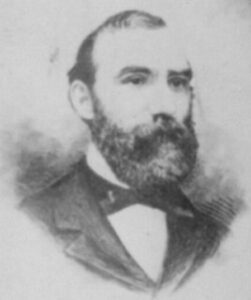
He was born on November 22, 1840, in Chicopee Falls, Massachusetts. His parents named him after the famous statesman Daniel Webster. His mother was a devoted Christian who prayed earnestly for her family. As a young man, Whittle professed faith in Christ early in life. He even led a Sunday school. But during his years away from home, his commitment weakened.
In 1861, he joined the Union Army at the start of the American Civil War. He served as an officer and rose to the rank of major by the war’s end (he received this as a brevet promotion). He fought in major battles, including at Vicksburg where he was wounded. He also marched with General William Tecumseh Sherman’s army through Georgia. One famous story from his war days inspired the hymn “Hold the Fort” (music by Philip Bliss). Whittle later shared a signal from General Sherman to besieged troops—”Hold the fort, for I am coming”—which Bliss turned into the well-known gospel song.
After the war, Whittle settled in Chicago. He worked for the Elgin Clock Company (or sometimes noted as Elgin National Watch Company). There he reconnected with his faith. He became close friends with the famous evangelist Dwight L. Moody. Moody encouraged Whittle to leave business life and join full-time evangelistic work. Whittle agreed and became a traveling preacher.
He led revivals across the United States and Great Britain. He worked closely with song leaders like Philip Paul Bliss (until Bliss’s death in 1876), then James McGranahan, and George Stebbins. These partnerships helped shape the gospel song style of the era—simple, heartfelt words set to singable tunes for large crowds.
Whittle wrote his first hymn in 1875: “Christ Is All.” Many others followed. He often used the pseudonym El Nathan for his writings. His most famous hymns include:
- “I Know Whom I Have Believed”
(1883, based on 2 Timothy 1:12) - “There Shall Be Showers of Blessing”
(from Zechariah 10:1) - “Moment by Moment” (co-written with his daughter May)
- “The Banner of the Cross”
- “Showers of Blessing”
- “Hold the Fort”
(lyrics inspired by his story, but music by Bliss)
His daughter, Mary (May) Whittle Moody, married Moody’s son William. She sang solos in meetings, wrote music for some of her father’s hymns, and helped edit hymnals.
Whittle died on March 4, 1901, in Northfield, Massachusetts. His work helped spread the gospel through music during a time of great revivals. His hymns still appear in many hymnals today, focusing on trust in Christ, assurance of salvation, and the hope of His return.